We Lead
By Example
The philosophy, the path, and the architecture behind everything we build. Three layers of the same truth.
The Dark Waters
Floating is often called sensory deprivation.
That’s backwards.
That term describes the process — what you’re removing from the environment. It says nothing about the experience or the benefit. It’s like calling meditation “thought watching” or sleep “consciousness deprivation.” Technically accurate. Completely misses the point.
What actually happens: when you step into the dark waters and lay back to float, you gain a stronger ability to see and sense the true light. The light within you. The light from something higher than you. You become more able to tune your attention back to the whisper within — back to the signals of your body and mind that you’ve been disconnected from for so long. That’s Source.
The time it takes for this to happen depends on the person. Because the reality is most of us don’t know how to relax. We don’t know how to be with ourselves or without an endless stream of hyperstimulation. We’re stuck in fight or flight and don’t even know we’re in it.
Floating can be scary because it touches on these and many other unknowns. But it is exactly the pilot light for your liberation from what you’ve been running from.
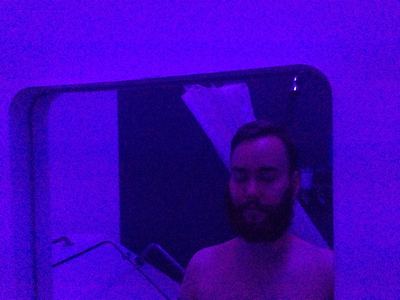
The darkness isn’t the threat. What you’ve been avoiding in the noise is. The tank gives you nowhere left to run. That’s immense bravery, and in turn, freedom.
And here’s what no one tells you about floating: it teaches you to hold paradox. To be fully alert and fully surrendered at the same time. To feel weightless and grounded simultaneously. To be alone with yourself and more connected to everything than you’ve ever been. The ability to sit with tension — to hold two opposing truths without needing to resolve them — is one of the most powerful capacities a human being can develop.
Floating trains this. Every session. Whether you realize it or not.
This matters because the people who build float centers are asking their clients to trust this process. To step into the dark. To sit with discomfort. To let go. And if you’re going to ask someone to do that, you need to have done it yourself — deeply, consistently, and recently.
You cannot guide others where you haven’t been.
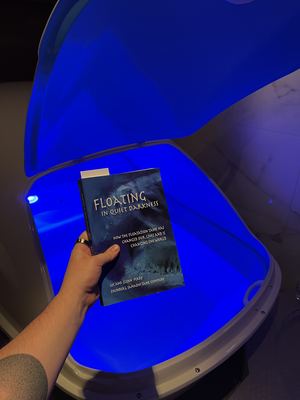
The Owner’s Process
Every float center starts with the same story. You had a profound experience in the water. It changed something fundamental in you. And you decided the world needs more of this. So you poured everything you have — savings, time, heart, relationships — into building a space where other people can have that experience too.
This impulse is beautiful. It’s also the beginning of one of the most painful traps in small business.
Because the experience is so powerful — because it changed your life — there’s a natural assumption that it will sell itself. Build it and they will come. And some do come. And they have beautiful experiences. Five-star reviews. Transformative sessions. Raving testimonials.
But the business struggles. And you can’t understand why.
The invisible crisis. Many float centers are run by people who stopped floating regularly. Not because they don’t believe in it. Because they’re too busy. Too tired. Too consumed by the business they built to serve the practice they love. The irony is suffocating — and most feel it without being able to name it.
Here’s what happens when your practice lapses:
You lose the clarity that floating provides. Decisions start coming from desperation instead of groundedness. Sales feels wrong because you’re trying to do sacred work with surface energy. Marketing feels manipulative because you’ve lost the felt experience of what you’re actually offering. Pricing feels guilty because you can no longer feel — in your body — the depth of what you’re providing.
And your clients sense it. Not consciously. But their nervous system reads the room. They don’t feel safe going deep, so they don’t go deep. You see shallow results and think: “Clients just want relaxation.” No. Clients are protecting themselves. They’re matching the depth of the container — and the container is only as deep as your practice.
You don’t maintain a deep practice. You can’t recognize or hold profound experiences when they happen. Clients sense this and self-limit to surface experiences. You see shallow results and lose faith in floating’s power. You float even less. The business struggles. Even less time and energy for floating. The spiral tightens. There becomes an echo of “I don’t have time” between you and your clients that is like an entrancing spell, lulling everyone unconscious without rest.
You’ve seen this. Maybe you’re in it right now.
Your float practice isn’t preparation for the business. Your float practice IS the business. Everything else flows from this. Or it doesn’t flow at all.
What changes when the practice comes back. When you maintain a consistent float practice — minimum twice a month, non-negotiable, protected in the calendar like any other critical appointment — everything downstream shifts. Decisions come from clarity, not desperation. Marketing flows from groundedness, not fear. Pricing reflects value, not scarcity. Sales feels like service, not manipulation. Clients go deeper because it’s safe to go deeper. That’s when transformation happens. That’s when they commit. That’s when they refer.
You and your staff embody the essence of floating and inherently know that sales is true service, guiding your clients into a practice that can transform them as it has for you.
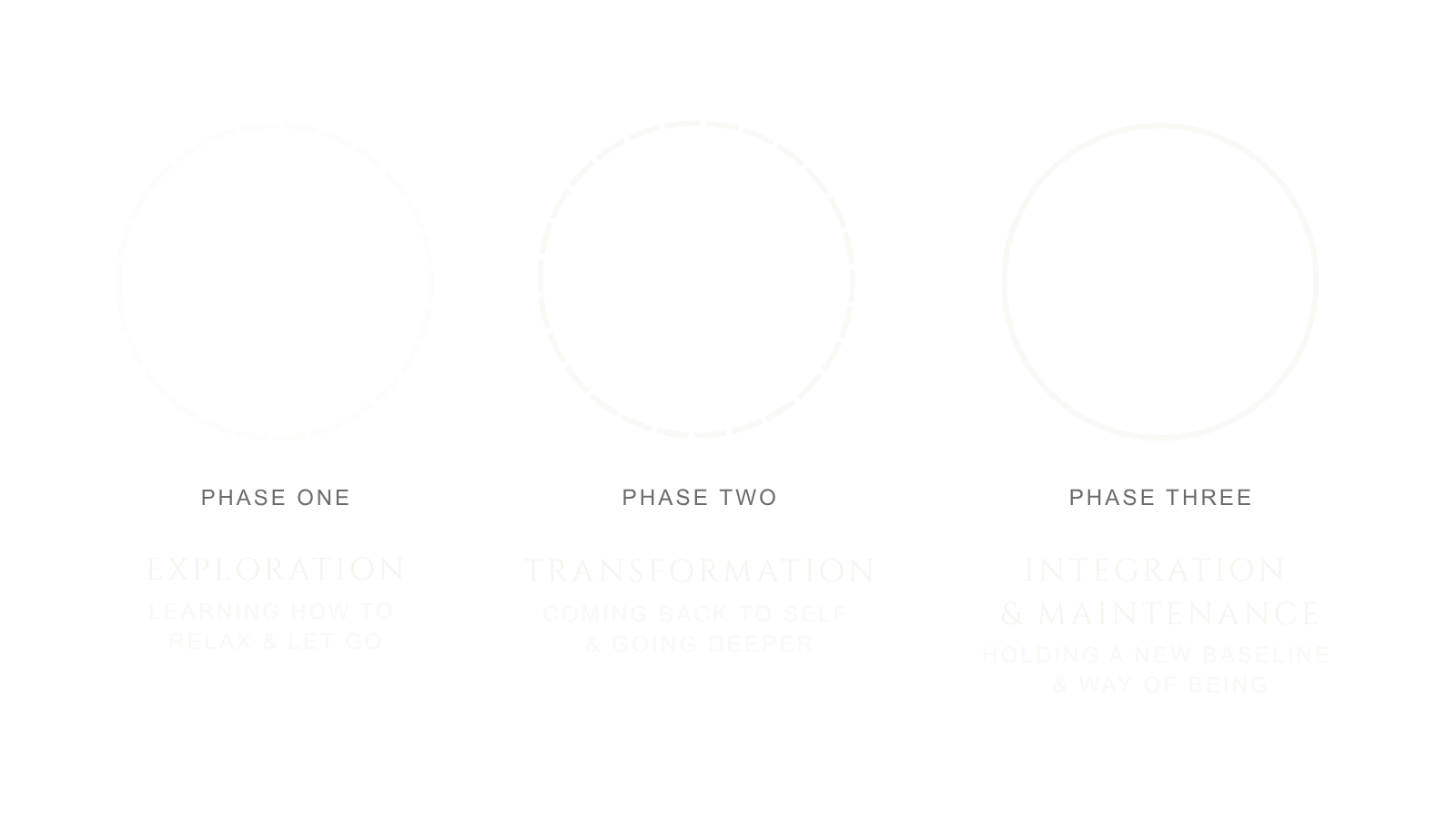
The three stages. People don’t just “float.” They move through distinct stages, and understanding this changes everything about how you run the business:
Most centers only serve Stage 1. Surface exploration. One-time visits. Groupon deals. Constant churn. And you wonder why the business doesn’t work. The business model that works is built on moving people to Stage 2 and Stage 3 — which requires you to have personally been through all three stages. To know what transformation feels like from the inside.
This is why your practice matters. Not as a nice-to-have. As the foundation of everything.
The leaks. Beyond the practice, there are structural gaps that almost every float center hits. These are not personal failures. They are the absence of foundations that the industry has never built:
These leaks are why your business bleeds revenue even when the experience is extraordinary. Five-star reviews and a failing business. That paradox exists in hundreds of float centers right now. And the answer isn’t better marketing. The answer is building the foundations that make everything else work.
The answer is in letting go of the lies that you’ve been holding on to.
Your process is the same process as floating itself: step into the discomfort, sit with what you find there, trust that something better is forming even when you can’t see it yet, and let the architecture hold what your heroics cannot.
Let go and receive.
The floats you want to skip are the most important ones. The business conversations you want to avoid are the most important ones. The discomfort you feel when looking at your numbers, adjusting your pricing, having a sales conversation, investing in systems — that discomfort isn’t a sign that something is wrong. It’s a sign that growth is happening.
Now this is critically important to not be confused with when something in your gut feels off. That is also signal. The skill of discerning the discomfort you’re avoiding that’s the doorway for your transformation vs. the discomfort that’s signalling something is off or out of alignment — is your internal compass.
Our job is to help you reconnect with that and strengthen it. It powers everything.
Your greatest transformation will come from the most uncomfortable parts. The times you want to float the least. The calls you want to get out of. When you’re most frustrated and uncomfortable — if you can connect back to your breath, sit with it, accept it and witness it, listen to it, ask it what it needs you to know — that is where the greatest leverage is.
That’s the process. It’s the same in the tank and in the business. And it’s the same process I went through myself.
Our Process
For ten years, I was the person you called when your float center needed more people through the door.
It started the way these things do. I’d been floating for years — since before there were commercial centers in most of Canada. My first float was in someone’s basement. I let go of a near-death experience in an hour in the dark, salty water. I knew immediately that this was something important. Something the world needed more of.
When Float House opened a block and a half from my apartment in Vancouver, I pitched them on marketing work. I could see what they were missing. That project led to a new center launch — incredible results. That led to others. Eventually I stopped pretending this wasn’t what I was supposed to be doing and went all in. More Floats was born.
What I built. At first it was consultancy — strategic advice, systems thinking, the big picture. Then it grew into a full agency. Done-for-you marketing: ads, social media, email, website, content production. Plus deep strategic integration — pricing strategy, business analysis, almost like a business partner. I had full admin access to my clients’ systems, their data, their operations. I was embedded.
It worked. We had some of the most successful center launches in the industry — 100 to 200+ members before doors opened. We helped centers recover faster coming out of lockdowns. We broke records. 80% of our clients had their best month ever during our last holiday campaign together. The results were real, and I was proud of them.
We were the most expensive option in the industry. And honestly, for the level of work — the production quality, the strategic depth, the results — we were undercharging. By a lot.
What I couldn’t see — and what I got wrong. While all of that was working on the surface, something else was happening underneath. I could see parts of it, but I couldn’t fix it from inside the model I’d built. And some of it, I couldn’t see at all — because I was running my own version of the same patterns.
The leaks I described above — the ones that bleed float centers dry — I was watching them in real time. I’d be running incredible campaigns, real production value, strategy generating measurable results, and then watching the revenue leak right back out. A first-time client comes in from a great ad, has an amazing float, and walks right out the door because nobody on staff was comfortable having a membership conversation. A center doing $30K in monthly revenue with $15K falling through gaps that had nothing to do with marketing.
It was like watching stacks of cash fall off a table into the abyss. Nobody trying to catch them. Nobody even noticing. Even worse, everyone actively avoiding it.
I tried to address it from within the agency model — consulting on it, coaching on it, hoping that great results would give the owners enough confidence to handle the rest. But the done-for-you model, at its core, created the opposite of what they needed. It created dependency. I was solving the symptom without addressing the cause. The results were real, but the owners weren’t actually growing.
For a long time, I couldn’t see that the done-for-you approach — however well-executed — was allowing owners to avoid the exact growth that would have transformed their businesses and their lives. I was making it easy for them to stay the same.
And I’ll be honest about my own pattern: I was undercharging because it made sales easy. I didn’t have to stand my ground on the value. I didn’t have to sit in the discomfort of a prospect saying “that’s too expensive” and hold my position. I was running my own version of the exact pattern I saw in my clients — avoiding the discomfort of owning the true value of my work, expertise, and the clear results that come with it.
If you’ve ever felt triggered or uncomfortable by our pricing — if you’ve thought “I see what he’s all about” just by looking at the number — I understand that reaction. I avoided provoking it for years by keeping my own price low. And that avoidance cost me, my clients, and the industry far more than the discomfort of an honest price ever would have.
Every one of these mistakes taught me something I couldn’t have learned any other way. And every one of them is now built into the architecture of how we work — as a guardrail, a lesson, a scar that informs the design.
What broke. The agency model grew bigger than me. I built a team, new systems, invested in content production — including a $20K film production project on behalf of my clients that performed beautifully and also became the foundation for the first World Float Day. I was doing everything I thought I was supposed to do to scale.
And I had built myself into a job I hated.
Not the work itself — I loved the clients, loved the industry, loved seeing the results. But the position I’d created for myself was strangling what I actually do best. I was managing a team, managing systems, managing production schedules — none of which was my genius. I’d optimized a business that wasn’t aligned with who I am, how I work best, or my vision for my life.
The pattern is obvious in hindsight. It usually is.
So I burned it down.
It took months. It was not easy. There was a massive sunk cost — team, systems, production investments, the entire infrastructure of a growing agency. Walking away from $500K in annual revenue. Walking away from something that was working.
But the conviction was absolute. I could see — with 10 years of pattern recognition and the honest assessment of what was actually happening underneath the good results — that the model wasn’t serving the people it was supposed to serve. Not fully. Not at the level they needed. The owners needed to be empowered, not serviced. They needed foundations, not campaigns. They needed to trust themselves, not outsource that trust to me.
As gracefully as I could for something like that. Wound down engagements and gave my clients a few months’ notice. Had hard conversations. Let go of revenue, relationships, and the identity I’d built over a decade.
I am so grateful for everyone who let go and bravely joined me in that space, both from our previous way of working and those whose first step with me was into the unknown.

The liminal space. What followed was — and I didn’t have this language at the time, but I do now — exactly like a long float.
I stepped into the dark. I didn’t know what was on the other side. I had mentors and beautiful people around me who helped me see what I couldn’t see from inside the old model. I sat in the discomfort of not-knowing. I went deeper into my own practice than I ever had. I let go of the thing that was working to find the thing that was True.
That’s not a metaphor. That is literally what happened.
The mentorship period — the time between the agency and what exists now — was the most uncomfortable and the most productive period of my professional life. Everything I had learned over ten years began to reorganize itself at a deeper level. Patterns I’d seen for years suddenly had names. The leaks I’d been patching from the outside revealed their root causes.
Why? Because I had space. I was resting, letting go, surrendering. I was listening.
And then something happened that shifted my understanding to an entirely different level. I spent thirty thousand dollars of my own money creating an immersive art experience called “Dear Inner Child.” Three days. Phone-free. Solo — inspired by the float experience. Designed to help people reconnect with the part of themselves they’d lost or buried or forgotten. It was deeply personal. Sacred, even. It came from my own healing journey, my own inner work.
And when it came time to think about sustainability, I found myself facing the exact same sacred pricing dilemma I’d been helping float center owners navigate for a decade. How do you put a price on something priceless without cheapening its value? I chose to keep the event free. I chose not to sell any of the art. Because I couldn’t bear the thought of turning something that sacred into a commodity. I was only able to make that choice because I’d spent the previous years restructuring my business to create space for this kind of sacred work — and I was willing to take a temporary loss as an investment in protecting the value for the long term.
What happened confirmed everything I’d been teaching: most people who registered ahead of time for free tickets and didn’t know me personally simply didn’t show up. When something is free, people treat it as disposable. Despite that, we filled the spots with people walking by on each of the days. The pricing psychology I’d been explaining to float center owners for years played out in my own work, with my own money on the line.
That’s when the sacred pricing problem clicked — not just intellectually, but in my bones. It wasn’t about economics or psychology or marketing tactics. It was about the fundamental tension between honouring something sacred and building something sustainable. I finally understood — through my own direct experience — why brilliant, courageous people who’ve invested everything into creating healing spaces find themselves reaching for discounts they know don’t make sense. And that deeper understanding changed everything about how we solve it. I wrote about this in depth here.
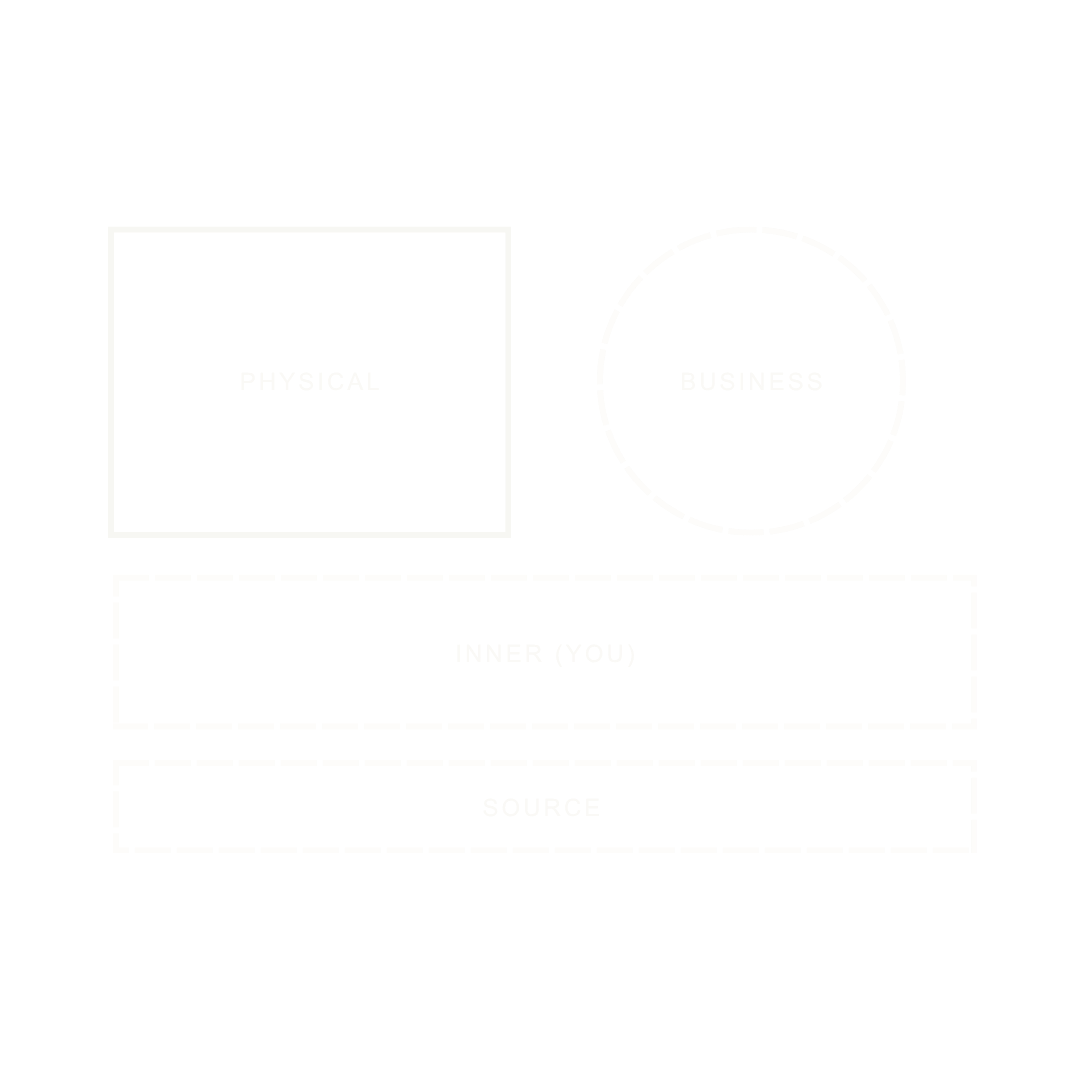
The Gratitude Debt Cycle. The Sacred/Structural Disconnect. Source at the Center. The three principles. Sacred pricing. The belief system that runs silently underneath almost every struggling float center — devotion equals suffering, and profit is suspicious.
I couldn’t have seen any of this if I hadn’t let go. The old model was too close to the surface to reach what was underneath.
What emerged. The Float Practice in its current form is not a slightly improved version of what came before. It’s a fundamentally different thing.
The Float Practice OS is a 90-day done-with-you operating system — information infrastructure, automations, AI intelligence layer, weekly leadership meetings, daily reports, retention systems, sacred pricing architecture. Built with the owner, not for them. They own every piece when it’s done. The architecture that was always needed but never existed.
Lilly — the AI advisor layer — is the first experience most people have with the quality and depth of the system. She asks questions before giving answers. She qualifies before she reveals pricing. She embodies the philosophy from first touch.
And there are now 11 detailed, transparent case studies published on the site. Eleven full stories — real owners, real numbers, real transformations of both themselves and the business. Not one-time flukes or inflated vanity metrics. They are significant shifts with clear data along with personal milestones that can only come from someone operating completely differently.
That is what transparency looks like. The full story — the data, the difficulty, the identity shift, and the depth of what changed on the other side. We show our work because that’s the standard we teach.
Where we are now. The concepts we teach are simple. The architecture that makes them work is not. That’s why the OS exists.
There is great depth powering and informing it all that is only earned from taking the leaps of faith, sitting in the discomfort without reaching for the easy button, and letting go, fully, of the old ways that could be so much easier and more comfortable.
If you’ve been watching from a distance over the last couple of years — if you’ve been confused by the changes, if you heard I “burned it all down” and wondered what was happening — this is the story. And this is where it led. Deeper understanding. Stronger architecture. A framework that addresses the root, not the symptoms.
The work keeps getting deeper because I keep going deeper — into the practice, into the patterns, into the businesses, into my own process. The concepts that others might adopt on the surface are grounded in 14 years of pattern recognition across 60+ centers, a personal practice of 600+ sessions, and a philosophical foundation that can’t be copied because it isn’t a tactic. It’s an integrated system built on lived experience.
If you’re running a float center and something in this resonated — if you recognized your own story in the spiral, if you felt the tension between the sacred work and the business reality, if you’ve been wanting to build something stronger but haven’t known how — this is what we do. We build the operating architecture that lets float center owners run businesses worthy of the work they do.
We are leading the industry forward into a new direction that honours the sacred, builds sustainability, and creates freedom so the leaders can lead.
The path is the same one I walked. The same one every owner walks. The same one that opens in the tank.
Step into the dark. Sit with the discomfort. Trust the process. Let the architecture hold what your heroics cannot.
You had to let go of the thing
that was working to find
the thing that was True.
We show our work. We lead by example. And we’re here when you’re ready.
The path is in front of you.
The architecture is ready.
It starts with the owner getting back in the tank.
Ask Lilly ← See the results