The Uncomfortable Investment
That Paid Off for a Decade
How a pre-launch float center owner said the price was too high, searched for three months, found no one else, and built one of the most successful float centers in the world — on memberships alone.
What the Data Says
Doubled the 100-member goal
Built entirely on floating and memberships
The longest in the history of The Float Practice
In April 2016, Ryan Ariko was building Float Station in Campbell, California. The center didn’t exist yet. There was no website, no social media, no marketing systems, no membership strategy. He needed all of it, and he needed it before the doors opened.
He found Bryce through the work Bryce had done with Float House in Vancouver, which at the time was the largest float center in the world. That work caught Ryan’s attention because it was the only marketing he’d seen that was built specifically for floating, by someone who actually understood the practice.
A proposal was sent. Ryan and his wife Katie looked at the price. They said no.
What Happened After
They Said No
“We really do want to work with you, we’ve just got to see if we can carve out something a bit more workable.”Katie — before the three-month search
The contract was signed in August 2016. Within weeks, the full launch infrastructure was built: social media accounts, a content calendar with 100 promotional posts, a founding membership campaign, Facebook ads, a launch contest, email marketing, Instagram strategy, brand guidelines, and a launch party event.
The social media campaign went live in September. The founding membership drive started immediately. People were signing up before the center had even finished construction.
Then the opening got delayed. As it almost always does with float centers. Construction timelines, equipment, permitting. The original target was November 2016. The grand opening didn’t happen until January 2017.
Through the delay, the founding membership campaign and community expectations were managed so that momentum didn’t stall and members stayed committed.
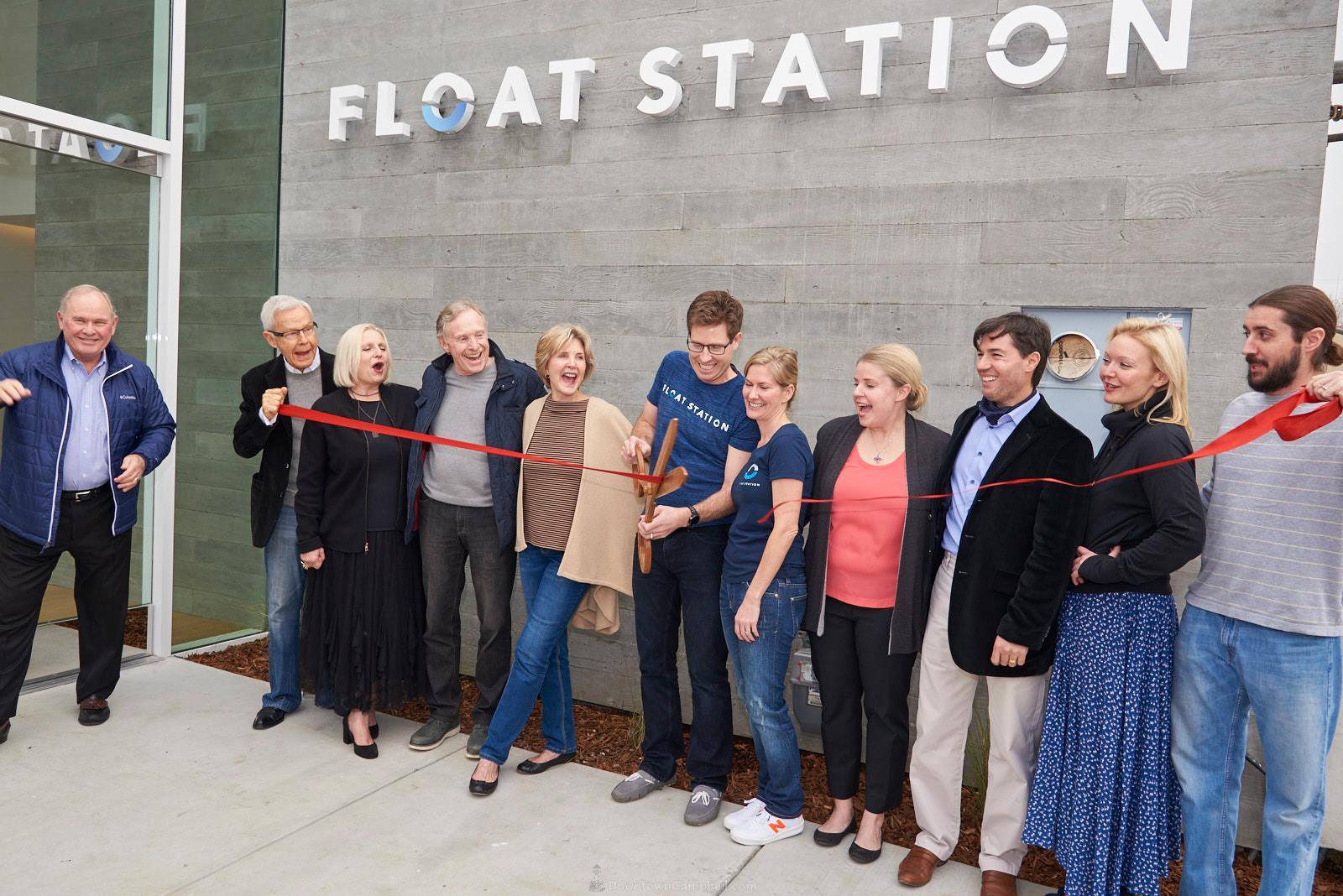
By the time Float Station held its grand opening in January 2017, the center had over 200 founding members. The original goal had been 100. They doubled it before the first paying customer ever stepped into a tank.
From No to 200 Members
“Bryce is a floater. He’s floated for years, and that is a huge differentiator.”Ryan — Float Station
What makes this story different from every other float center launch is the length of what followed.
Float Station didn’t just have a strong opening. It became one of the most successful float centers in the world, built on a membership model where 83 to 84 percent of revenue comes from members. Not add-on services. Not retail. Not massage or sauna or infrared. Floating and memberships. That foundation, built in the first 90 days, held through everything that came after.
Most people in the industry will tell you that’s impossible — that you can’t sustain a float center on memberships alone. Ryan proves it’s not only possible, it’s the most stable model there is.

The partnership continued. Through COVID, where Float Station posted 12 consecutive months of net positive growth on the other side. Through staff transitions, operational challenges, and the natural evolution of a business over nearly a decade. Through Ryan installing a home float pod and recommitting to his own practice. Through his wife Katie re-engaging as a full operational partner. Through a fundamental reframe of the business from “relaxation” to “transformation.”
Only 4–5% of membership cancellations relate to not seeing value in floating. The rest are life changes — moves, finances, schedules. The experience holds. The members stay.
Better Results on Less Budget
Funnel Sales
Ad Spend
And sometimes the value of the partnership showed up in ways that had nothing to do with marketing. In April 2024, a random notification surfaced that a tracking tool Ryan had cancelled months earlier was still quietly charging his account $75 per month. Seven payments had gone through without anyone noticing. The charges were caught, cancelled, and all seven payments refunded. $600 back in Ryan’s account from something that wasn’t anyone’s job to check.
That is the difference between a vendor and someone who is actually watching out for your business.
Nearly ten years later, Ryan is still a client. The longest partnership in the history of The Float Practice.
“The magic you are looking for is still in the work you’re avoiding.”Ryan — Float Station
What Made the Difference
Ryan and Katie didn’t say no because they didn’t believe in the work. They said no because the price felt uncomfortable. And then they spent three months discovering that no one else could do what they needed done. Not because marketing expertise is rare, but because the intersection of marketing expertise and deep understanding of floating is almost nonexistent.
When they came back, the investment hadn’t changed. What changed was their certainty that there was no alternative. The difference is that they weren’t paying for a service or some advice. They were investing in transformation and deep support from someone who cares just as much as they do.
The launch methodology was the same approach that would later produce 202 members for The Float Loft and similar results for centers across the industry. But Float Station was the first. The founding membership campaign, the pre-launch marketing infrastructure, the systems built before the doors opened. It all started here, in a float center in Campbell, California, with an owner who almost didn’t say yes.
What Ryan built after that is what most people in this industry say can’t be done. A single-location float center, built entirely on floating and memberships, running for nearly a decade, with 83–84% of revenue from members. No multi-location expansion needed. No add-on services to dilute the model. Just a deep commitment to the practice, the right foundations, and a partnership that never stopped.
Every prospect who says “it’s too expensive” is standing exactly where Ryan was standing in May 2016. The question isn’t whether the investment is uncomfortable. The question is what happens after three months of looking for someone else.
Like a great float, the magic and transformation is in sitting with and moving through the discomfort.
The Complete Results
What Ryan Said
“Bryce is a floater. He’s floated for years, and that is a huge differentiator.”On why it matters
“The magic you are looking for is still in the work you’re avoiding.”On making the investment
Ryan’s story started with
saying it was too expensive.
Nearly ten years later, he’s still a client.
Ask Lilly ← Back to all results